
Abstract
The huge advances we have witnessed in digital technologies over the past decades are opening the door to the conservation, preservation, restoration, and dissemination of our tangible cultural heritage on an unprecedented scale. New documentation methods now give us the opportunity not only to experience the beauty and value of these cultural assets but also to share and distribute them all over the world.
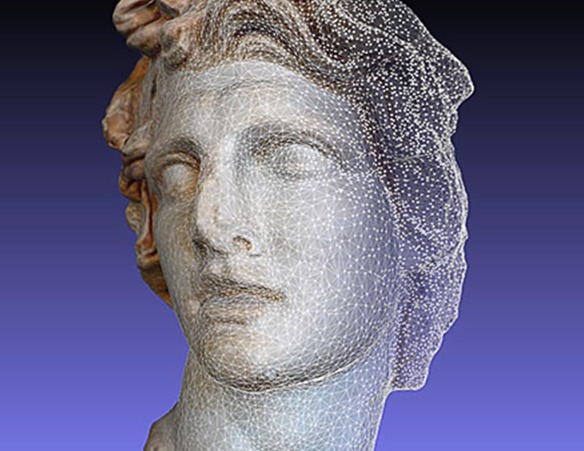
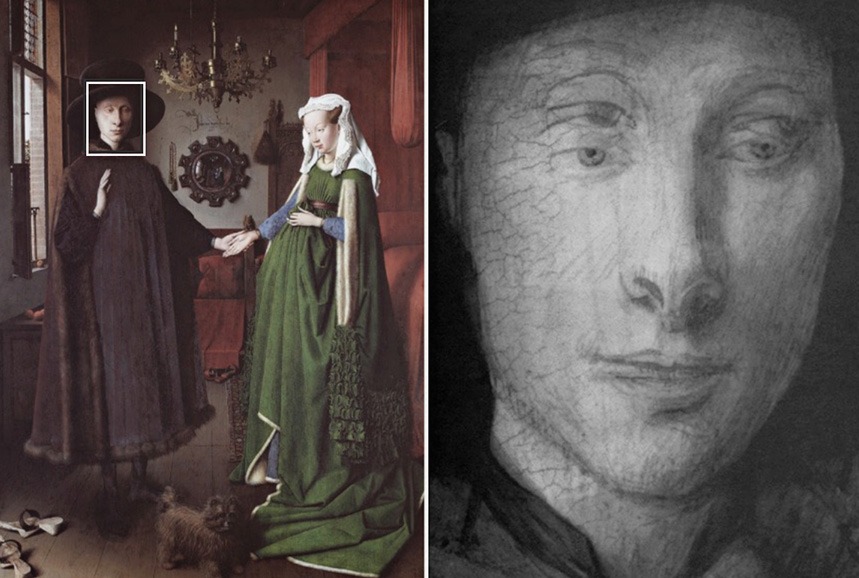
Nowhere is this impact greater than in the vast field of imaging. Digital imaging technologies are exploring and uncovering new frontiers in virtually all fields of heritage research. From the coverage of vast areas by space and air to inspection on a microscopic level. From the world visible to the human eye to the unseen one lying beyond our spectral capacity. From the secrets embedded within surface textures to the hidden worlds lurking beneath the surface.
This opening lecture will present an overview of the vast topic and briefly touch on the various fields, applications, and technologies, which will be expanded upon in the coming talks.
After the session
Session highlights
The main ideas, techniques and terms from the talk, with links for going further.
Read the highlights
Recommended by the speaker
Suggested reading
Nine case studies recommended by Moshe Caine, each with technology notes and links.
Open the reading list
Biography
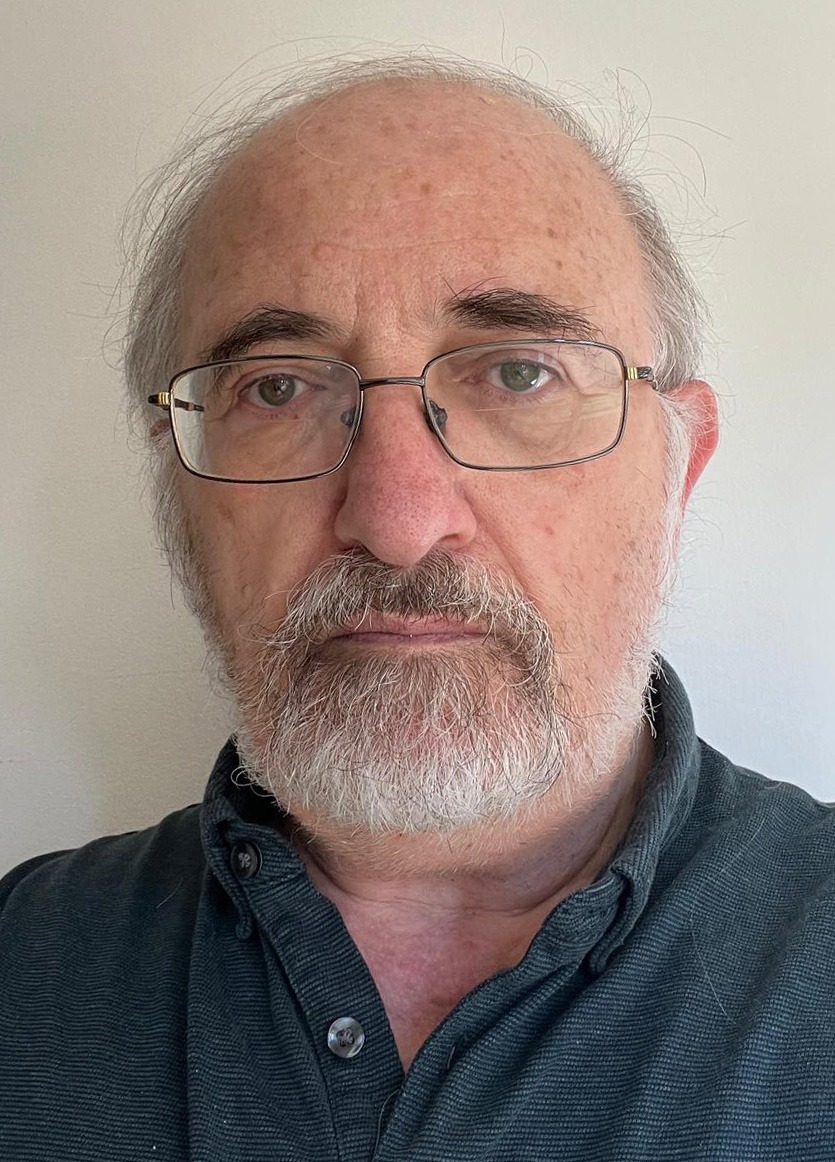
Moshe Caine is a graduate of the Hebrew University Jerusalem, Philosophy & Sociology (1977), the Harrow College of Technology & Art (now Westminster University, London) Photography Film & Television (1980), and Coventry Polytechnic (today Coventry University), Electronic Imaging (1989).
Moshe Caine is one of the pioneers of the multimedia industry in Israel, establishing and running the Icons Multimedia company in Jerusalem for 20 years (1989-2009). Over the past three decades Prof. Caine has specialized in digital solutions for cultural heritage preservation institutions, Archaeology, conservation, restoration and presentation.
Since 1981 he has taught in both undergraduate and graduate programs, including the Bezalel Academy of Art & Design (1981-2009), Haifa University (2011-2015), Emunah College (1982-2019), and the Hadassah Academic College (since 1984).
Between 2015-2019 he chaired the department of Photographic Communication in the Academic College.
Since 2023 he acts as chair of the Jerusalem Institute for Research and Digital Documentation of Cultural Heritage.
Publications by Moshe Caine
The full texts are in the Library, which opens with the course password, for students and speakers.
- The Spirit of the Cloud: The “New-Jerusalem” as a metaphor for social experiences of Virtual technologies. Moshe Caine, Doron Altaratz, Eytan Mann and Adam Havkin. Proceedings of EVA London 2020, volume 30, pp. 58-65, 2020. Photogrammetry and virtual reality reconstructions of the Conegliano Veneto synagogue and the Kidane Mehret Ethiopian Church in Jerusalem.
- If Stones Could Speak: A collaboration in Mutual Understanding. Moshe Caine. Annual Conference on Information Science (ACIS 2022), University of Nairobi, 2022. A project on cross-cultural documentation of lost Jewish communities in Northern Bavaria.
- Historical Archaeology of Medieval Pilgrimage: Dating the “Walls of the Crosses” in the Holy Sepulchre Chapel of St. Helena. Amit Re’em, Moshe Caine, Doron Altaratz and Yana Tchekhanovets. New Studies in the Archaeology of Jerusalem and Its Region, volume 15, 2022. A study of the crosses engraved on the walls of the stairway to the Chapel of St. Helena. Online: BGU research portal.
- Consumer Solid State LiDAR: A Viable Tool for Heritage Documentation? Moshe Caine. EVA Florence Conference, 2022. Tests Apple LiDAR scanning as a tool for heritage documentation.
Moshe Caine
Professor, Jerusalem Multidisciplinary College. Founder of this course. Chair of the Jerusalem Institute for Research and Digital Documentation of Cultural Heritage since 2023.
Contact and links
Email: mosheca [at] edu.jmc.ac.il
The Jerusalem Institute for Research and Digital Documentation of Cultural Heritage
Next session: Sharon Tager. All ten sessions