
Abstract
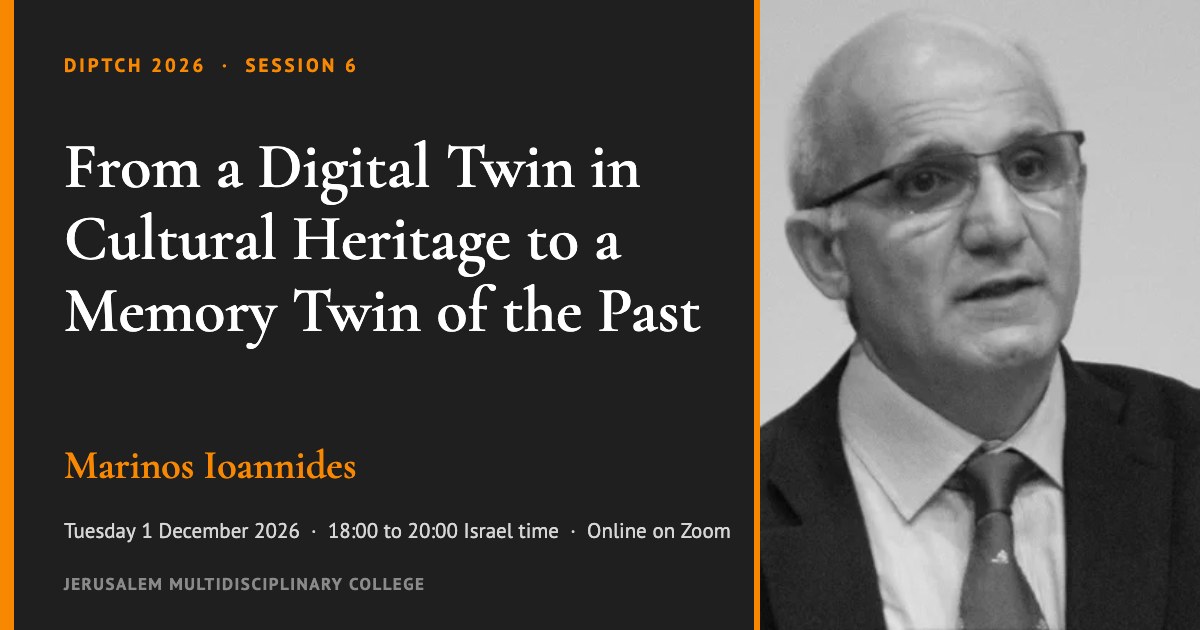
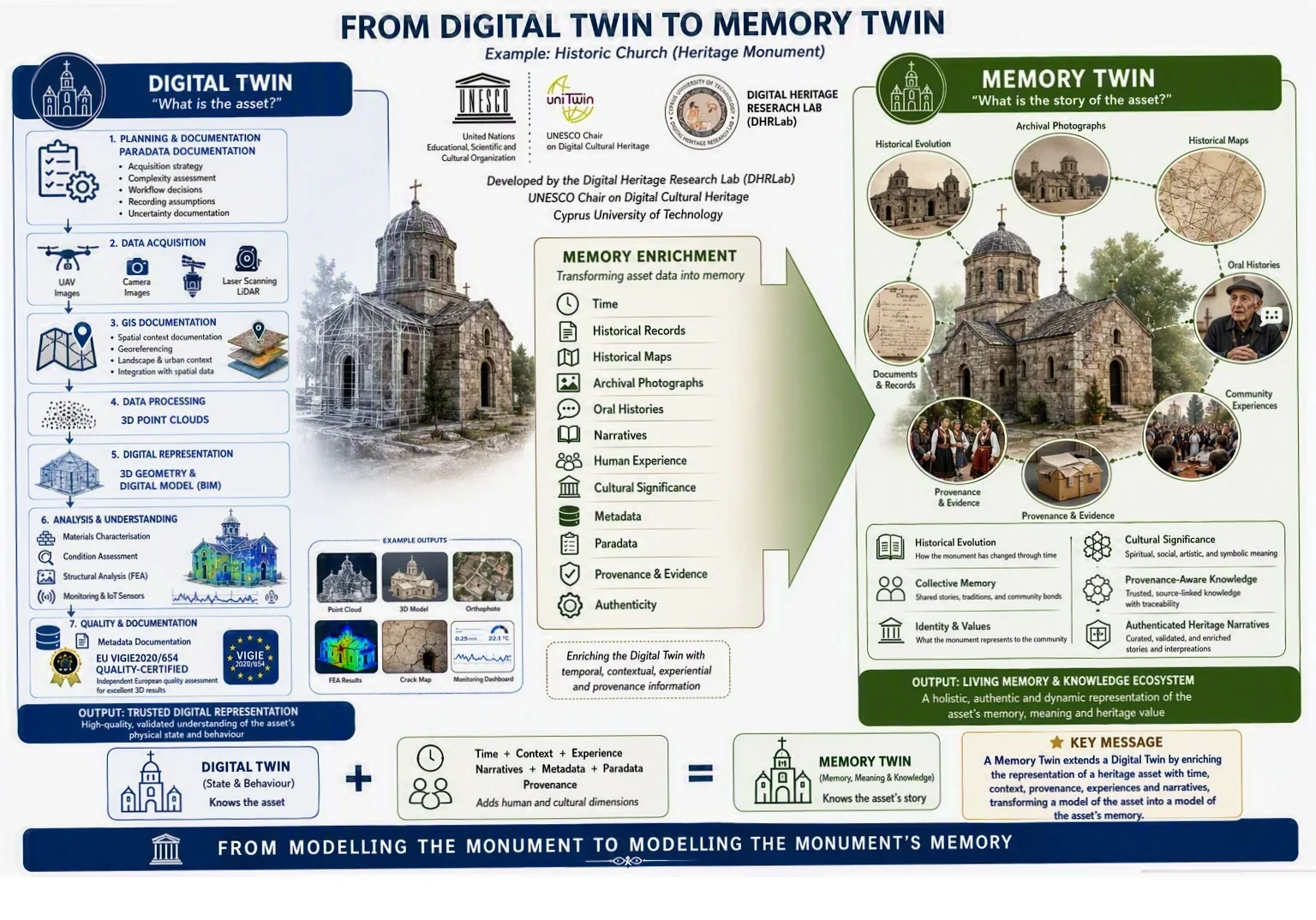
In the era of the 21st digital century, where cultural heritage is increasingly mediated through digital technologies, the concept of a Digital Twin, a precise virtual replica of a physical object, has become a powerful tool for the multidisciplinary user society in research, preservation, visualisation, and education. Typically, Digital Twins in the field of Building Information Modelling (BIM) are developed to LOD300, a level of detail that focuses primarily on material fidelity, geometric accuracy, and technical specifications. Yet, as we replicate cultural heritage assets such as artefacts, monuments, and spaces with ever-greater precision, a critical question arises: are we also preserving the knowledge, stories, meanings, memories, and unique identities that give these objects their cultural significance?
This presentation introduces the emerging notion of the #MemoryTwin: a complementary or alternative digital model that deliberately goes beyond LOD300 by prioritising intangible heritage, emotional resonance, and community memory. While #DigitalTwins stop at technical reconstruction, #MemoryTwins extend further; capturing the narratives, traditions, lived experiences, and associated values that imbue cultural heritage objects with meaning. These are the elements often overlooked in today’s data-driven reconstructions.
Drawing on interdisciplinary research and real-world case studies, the talk will illustrate how #MemoryTwins can expand our understanding of authenticity, foster inclusive interpretation, and empower communities to take part in the digital stewardship of their heritage. It will also address the ethical, methodological, and technological challenges involved in embedding memory and identity into digital heritage projects, and highlight how the digitisation of the past can contribute to the circular economy and improve the well-being of future generations by promoting sustainable access, reuse, and cultural resilience.
Biography
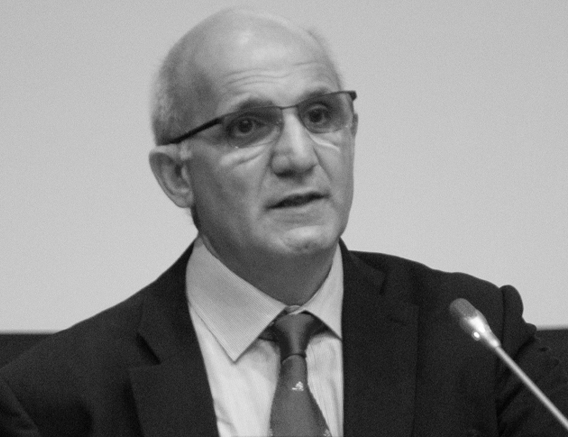
Dr Marinos Ioannides is the founder and holder of the UNESCO Chair on Digital Cultural Heritage and Director of the Digital Heritage Research Lab at the Cyprus University of Technology. He holds an MSc in computer science and PhD in engineering from the University of Stuttgart, Germany, specialising in 3D volumetric reconstruction from digitised data. A pioneer in digital heritage, Dr Ioannides is the founder of the first-of-its-kind Research Centre on Digital Cultural Heritage in Cyprus. He has secured over €12 million in highly competitive EU-funded projects since 2013, including EU FP7-MSCA ITN-DCH and EU FP7-ViMM. He is the main author of the EU Study VIGIE2020/654 on quality in 3D digitisation of tangible cultural heritage and a key contributor to the innovative “Memory Twin” methodology. His achievements have earned him international awards such as the EU KIT, IBM and Tartessos Prizes. Since 2020, he has also been a corresponding member of the German Archaeological Institute. His leadership has firmly positioned Cyprus as a global hub for digital cultural heritage.
Publications by Marinos Ioannides
The full texts are in the Library, which opens with the course password, for students and speakers.
- 3D Research Challenges in Cultural Heritage III: Complexity and Quality in Digitisation. Edited by Marinos Ioannides and Petros Patias. Springer, Lecture Notes in Computer Science 13125, 2023. Open access, CC BY 4.0. Online: open access at OAPEN.
- 3D Research Challenges in Cultural Heritage IV: Risk Prevention and Monitoring Methods. Edited by Marinos Ioannides, Giovanni Issini and Daniel Oliveira. Springer, Lecture Notes in Computer Science, 2025. Open access, CC BY 4.0. Online: Springer, via DOI.
- 3D Research Challenges in Cultural Heritage V: Paradata, Metadata and Data in Digitisation. Edited by Marinos Ioannides, Drew Baker, Athos Agapiou and Petros Siegkas. Springer, Lecture Notes in Computer Science 15190, 2025. Open access, CC BY 4.0. Online: Springer, via DOI.
- Handbook of Digital 3D Reconstruction of Historical Architecture. Sander Münster and twelve co-authors, including Marinos Ioannides. Synthesis Lectures on Engineers, Technology, and Society, volume 28, 2024. Open access. Online: Springer.
After the session
Session highlights
The main ideas, techniques and terms from the talk, with links for going further, will be published here after the session on Tuesday 1 December 2026.
Marinos Ioannides
UNESCO Chair on Digital Cultural Heritage, Cyprus University of Technology.
Contact and links
Email: marinos.ioannides [at] cut.ac.cy
Next session: Mia Trentin. All ten sessions